2019 for the Card Game Market: Are Spin-Off Releases on the Rise?



Love them or hate them, 2018 saw the release (or re-release) of two major spin-off card games; The Elder Scrolls: Legends and Gwent: The Witcher Card Game. Although both titles had already been available for some time, the two both launched anew in the latter half of 2018. The Elder Scrolls: Legends was rebuilt from the ground up and re-released by a new developer, while Gwent finally released after its long beta period. Now that both games are out, how are things looking for the two spin-offs going into 2019?
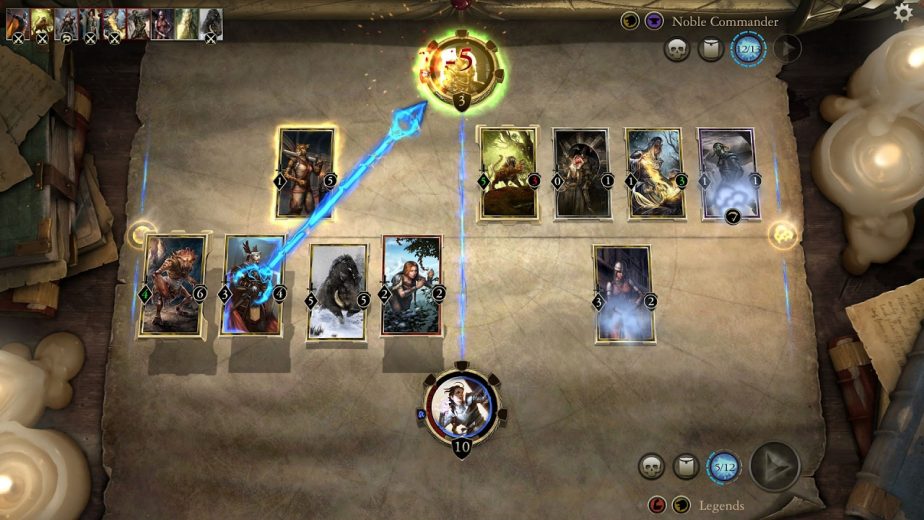
2018 Spin-Off Card Games: Gwent and The Elder Scrolls: Legends
Many hardcore RPG fans will scoff at the notion of card game spin-offs; indeed, there is a perception among plenty of gamers that such games are cheap money-grabs made at the expense of larger projects. However, despite this opinion, plenty of online card games have enormous player-bases and produce huge amounts of revenue. Games like Hearthstone have dominated the market for some time now, laying out a clear model for other developers to follow. (Although Pete Hines has refuted comparisons between Legends and Hearthstone!)
It’s easy to see the appeal for developers. Although some fans probably won’t be happy, they can develop a card game with a small team, or a third-party studio in the case of Bethesda, and it can then function as a steady revenue-producing machine. In the long run, these games likely help to boost the budgets of the studio’s larger projects and keep the companies on stronger financial footing. Both Legends and Gwent are likely to be fulfilling this role in 2019, now that they’re out of development.
The Audience and Accessibility of Card Games
While there’s certainly an audience for more traditional card games online, catered for by sites like Solitaire Card Games, the audiences of spin-off titles is more of a mix. This is precisely an area where card game spin-offs often clash with established fans; the core fans of an RPG series like The Elder Scrolls are not necessarily the core audience for a game like Legends or Solitaire. While there are certainly some gamers who enjoy both the card game and the full RPG releases, there are likely plenty more playing Legends who aren’t huge Elder Scrolls fans. Card games are much more casual, and accessible, than major releases like Skyrim and The Witcher 3; they open their franchises up to a larger overall audience. This isn’t necessarily a bad thing, but it’s easy to see why some core fans might be unhappy at the announcement of such spin-offs.
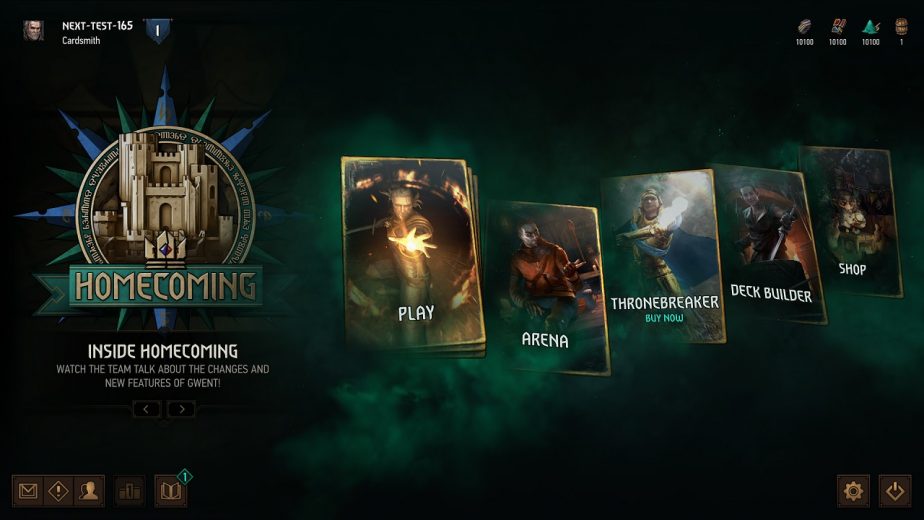
In the case of Legends and Gwent, it isn’t public knowledge how much revenue they generate. However, we can make some rough estimates based on other figures. For example, in the case of Gwent, CD Projekt Red released the card game in beta form in early 2017; the only game it released that year. Nonetheless, CD Projekt’s digital marketplace, GOG, saw their net year-on-year profits rise 495% at the end of the same year. Of course, it’s impossible to say how much influence Gwent had on that increase. However, it’s highly likely that it was the primary contributor. Overall, CD Projekt’s profits rose 39%, an increase of around $3.3 million. Evidently, the choice to develop Gwent has been paying off.
Following Release: Expansions and eSports
Now that both Legends and Gwent are out of development; the developers will be able to focus on refining their respective experiences and expanding. Legends already has a fledgling esports scene, while Gwent’s own esports presence grew beyond the term ‘fledgling’ some time ago. The fourth Gwent Challenger tournament, which took place four months ago, had a total prize pool of $100,000, and that tournament was a step below the Gwent World Masters. Gwent’s esports profile has grown considerably since it began, and looks set to continue that growth in 2019. Legends, on the other hand, held its first esports tournament last year at QuakeCon 2018. It remains to be seen whether SparkyPants Studios will continue to push into this area now that the game has been re-released.
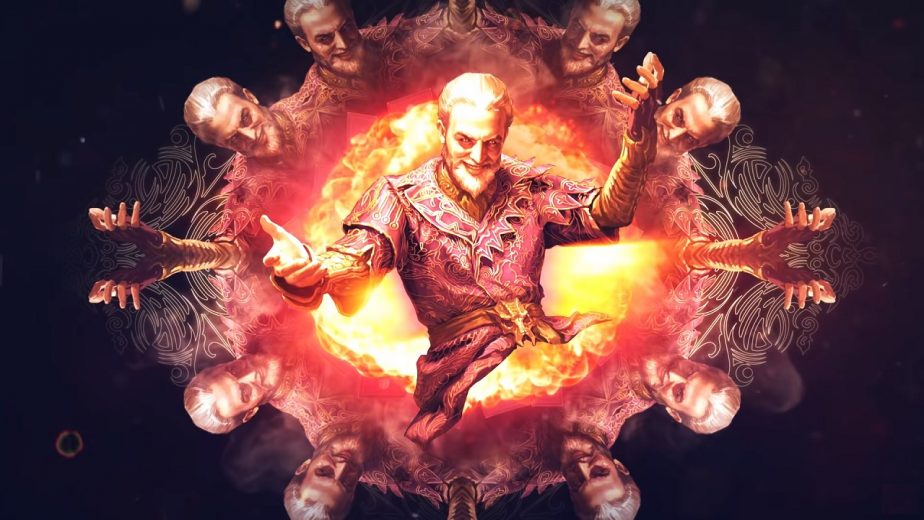
Where Elder Scrolls: Legends is definitely going, at least for now, is the route of DLC. The Isle of Madness, a major story expansion, recently became available to pre-order. If Isle of Madness performs well, then SparkyPants may well choose to focus on similar expansions in 2019. Gwent, meanwhile, is unlikely to follow suit. The full release of Gwent coincided with the launch of Thronebreaker: The Witcher Tales, what was once intended to be Gwent’s single-player campaign. The standalone RPG features Gwent mechanics and a full story. Prior to release, the game’s director did state that ‘The Witcher Tales’ could become a series. However, the game reportedly under-performed somewhat, leaving its future as a series in question. Fans will have to wait and see what CD Projekt Red chooses to do in the coming months.
While Thronebreaker may not have attracted the attention that the studio was hoping for; Gwent still seems to be doing very well as an online card game. Similarly, despite some backlash from fans online, Legends also seems to have found a niche for itself from which it can begin to grow in 2019.