The UK’s Gambling Commission is Concerned About Lootboxes





Online gambling is fast becoming the predominant form of gambling. Indeed, in the UK alone, it already accounts for around 39% of gambling. This factor, combined with the rapid growth of the esports industry, has resulted in a simultaneous and meteoric rise for esports betting. In their most recent report on the online gambling industry, 3radical spoke with the UK’s Gambling Commission about their stance on loot boxes and their efforts to address problems with online gambling.
The Gambling Commission’s Efforts to Properly Regulate Online Gambling
By global standards, the UK’s online gambling industry has relatively strong regulations. Indeed, when asked by 3radical about what steps the Gambling Commission is taking to regulate casinos, sportsbooks, and other online gambling establishments, they state; “Online gambling is a tightly regulated industry. We continue to do everything in our power to protect people, and constantly review and develop our regulations”. However, online gambling, and particularly esports betting, is a constantly evolving industry. Moreover, while regulations may exist, there also exists evidence that certain regulations are frequently ignored – both by gambling operators and advertisers – without significant repercussion.

A recent report published by the University of Bristol found that among 888,000 esports betting tweets from 2018, 74% breached one or more regulations on the advertising of gambling. Traditional gambling operators and bookmakers were only slightly worse, at 68%. Evidently, while the Gambling Commission may be implementing regulation for casinos and sportsbooks, actually monitoring and enforcing that regulation is very difficult online. While Google requires active searching on the part of consumers, such as a general search for “online casinos in Austria,” or suchlike, Twitter advertising can put content directly in front of people without that step of active user engagement.
Fortunately, the Gambling Commission has scored some significant victories for consumers in the last year. For failing to protect consumers, online gambling operators had to pay a total of £28 million in penalties, for example. New age and identity checks also went into place earlier this year. However, these protections seem not to be broad enough. In the University of Bristol report, researchers found that 30% of the people retweeting or replying to esports betting tweets were under the age of 16. Evidently, regulators need to work with social media sites and advertisers in addition to the casinos and sportsbooks themselves to implement stronger age verification technology; something which the report recommends.
The Gambling Commission’s Current Stance on Lootboxes
Loot boxes are another problematic aspect relating to online gambling. Specifically, debate has raged for several years over whether loot boxes constitute gambling or not. Indeed, some countries, such as Belgium, have already chosen to outlaw their use. In the UK, however, the Gambling Commission’s current stance is that loot boxes do not technically meet the legal definition of gambling.

“In terms of loot boxes, a key factor in deciding if that line [between what is and is not gambling] has been crossed is whether in-game items acquired ‘via a game of chance’ can be considered money, or money’s worth”; explains the Commission; “In practical terms, this means that where in-game items obtained via loot boxes are confined for use within the game, and cannot be cashed out, it is unlikely to be caught as a licensable gambling activity. In those cases our legal powers would not allow us to step in.”
However, this doesn’t mean that they aren’t concerned about loot boxes. IN fact, it sounds more like the legal definition of gambling may be somewhat outdated in this case. The Commission’s statement goes on to state; “Many parents are not interested in whether an activity meets a legal definition of ‘gambling’. Their main concern is whether there is a product out there that could present a risk to their children. We are concerned with the growth in examples where the line between video gaming and gambling is becoming increasingly blurred.”
The Industry is Shifting on the Lootboxes Issue
Fortunately, many of the larger publishers in the gaming industry have begun to move away from loot boxes, favouring instead alternative methods of delivering micro-transactions. However, loot boxes do remain a big problem in other areas, particularly for mobile gaming, for example. However, when it comes to loot boxes, the gaming community is generally on the same side as the regulators; loot boxes are almost universally unpopular, a factor which has likely been instrumental in pushing companies away from their use. As a result, the trend away from lootboxes is likely to continue, at least in the most visible areas of the industry. The Commission, meanwhile, is unlikely to change its current stance until lawmakers see fit to update the legal definitions of gambling.
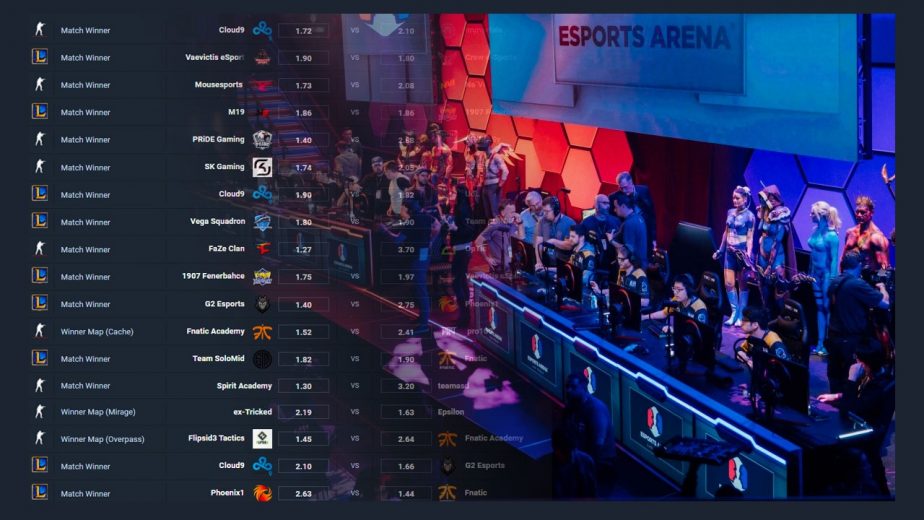
Looking ahead to the new year, the Gambling Commission intends to continue with a three-year initiative launched in April; the National Strategy to Reduce Gambling Harms. This strategy covers all online gambling as a whole, including sportsbook and casino wagering. However, esports fans can hope that the Commission will consider the unique problems facing the esports betting industry as well. “We have also recently asked for views on banning the use of credit cards and introducing gambling blocking software,” state the Commission.
Hopefully, regulators take the information found by the University of Bristol and other such reports to push for stricter age verification methods on social media. The esports betting industry needs proper regulation in order to earn consumer trust. Indeed, in 3radical’s report summary, the 2019 report concludes that; “Success in this new world doesn’t come by pursuing the biggest race to the marketing bottom by offering the biggest and longest promotions. The winners are building relationships and a fantastic player experience. They’re concentrating on being better, not just cheaper.”